Sherwood Enforces New MCPS Phone Policy
by Andrew Fenner ‘27
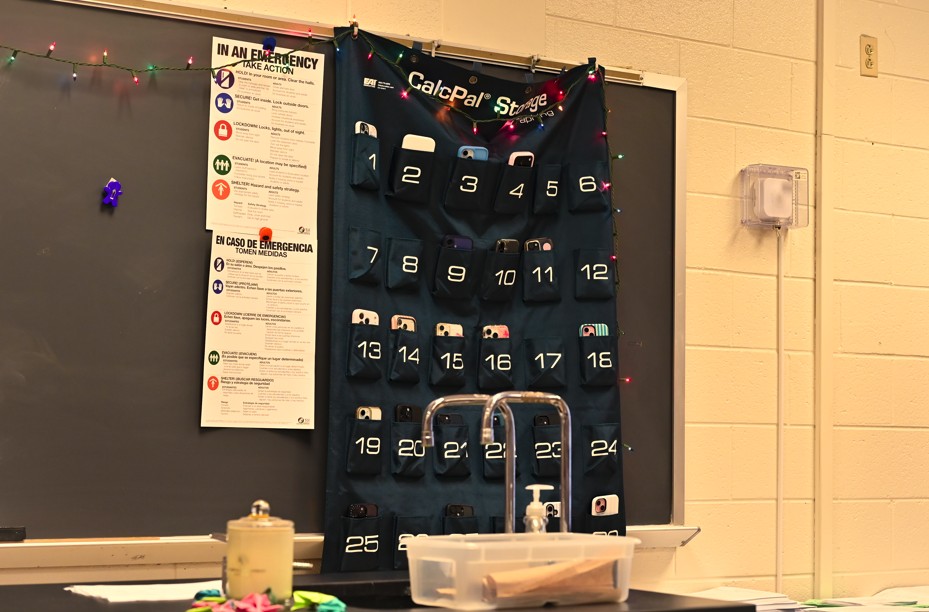
After the Phone-Free School Act by Maryland state legislature mandated school districts impose a ban on cellular devices during the school day for the 2027-2028 school year, MCPS enacted the policy for the 2026-2027 school year to help students transition. This new policy comes after staff, administrators, and students reported cellphones posed a significant distraction to learning.
Sherwood, under the leadership of Principal Micah Wiggins, began the new school year strictly enforcing the county’s new “No Cell Bell-to-Bell” policy. Students have been instructed not to use their cellphones at any point during the school day, including in between periods and at lunch. The administration at Sherwood has maintained that the reasoning behind this strict prohibition is for the benefit of the students.
“We want lunch to be an opportunity for students to talk to one another, build relationships, take a break from academic demands, and be part of the school community. Building relationships and developing interpersonal skills are so important,” said Wiggins. “These are skills that you will need to have a successful job or career, and they have to be developed over time.”
According to Wiggins, the policy is not in place for the sole purpose of getting students to put their phones away, but rather to help students become more engaged, connected, and prepared for life after Sherwood to ensure students are able to find success in whatever field they choose.
Wiggins believes firmly that excessive cell phone use is creating unhealthy habits among young people; habits that he hopes will be curbed by the new policy. “Students seem to be developing some dependencies of these devices. This is very concerning to me,” said Wiggins said. “I do think excessive phone and screen use is an important issue for young people, but I don’t think the phone itself is the enemy.”
By the end of the year, Wiggins is hopeful there will be a positive, noticeable difference in student learning and engagement. “I hope we see students who are more present in the classroom and more engaged with one another,” Wiggins said. He anticipates that the change will allow students to focus on learning and improving academically without the added distractions that cell phones bring.