Team Bonding Creates Camaraderie
by Hailey Leviathan ‘28
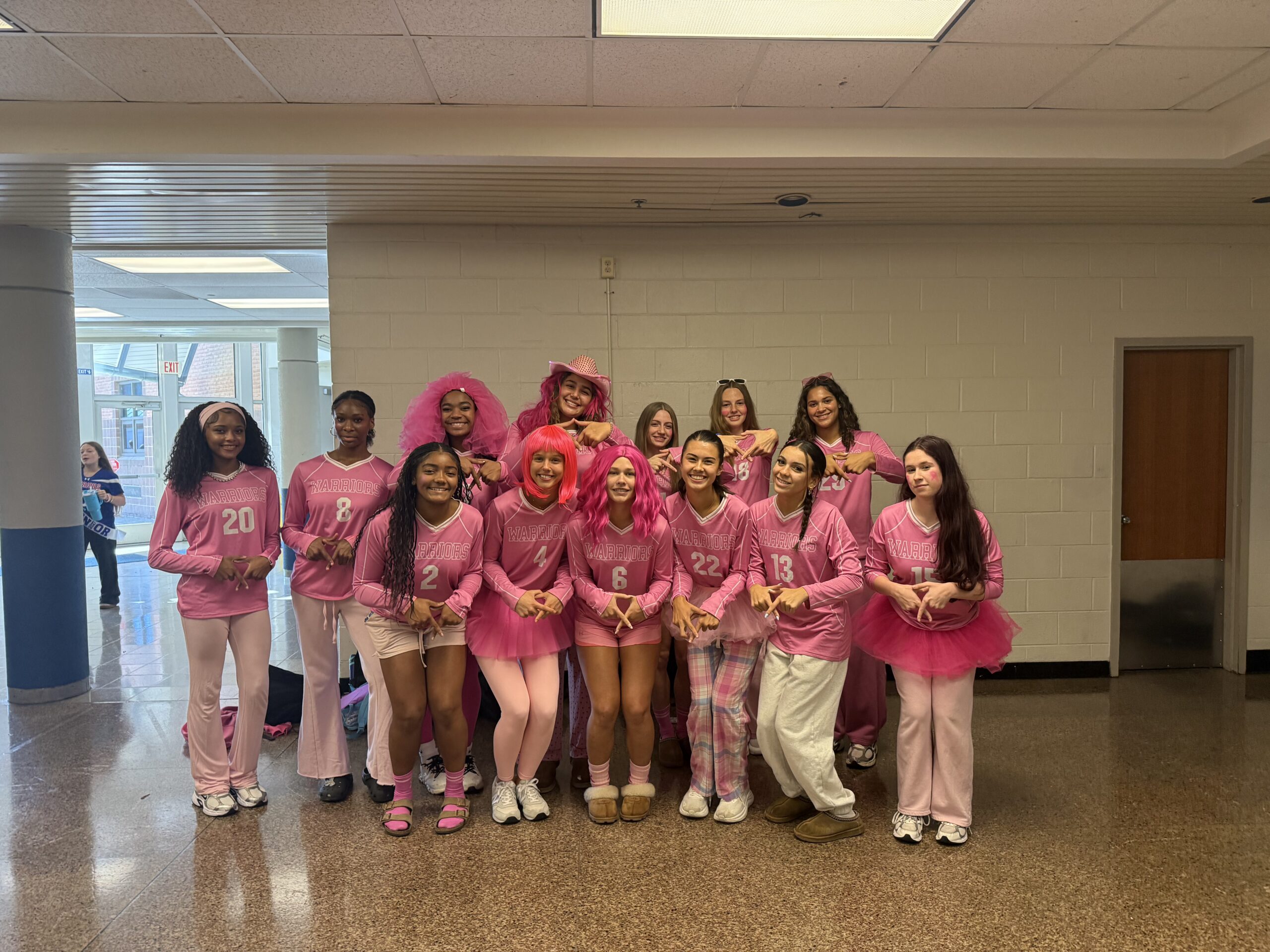
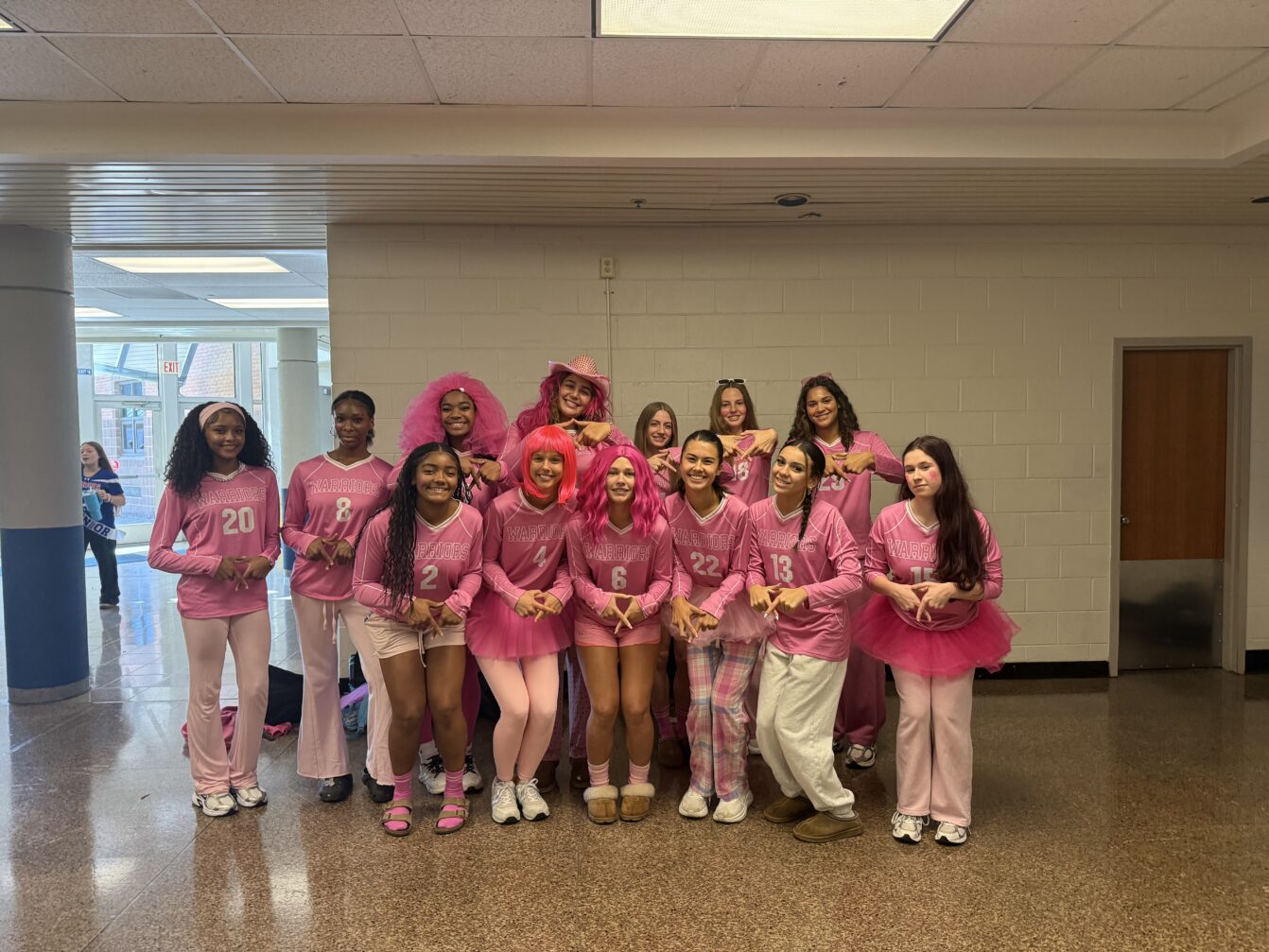
Girls varsity volleyball suits up for the annual October Dig Pink game.
It is nearly impossible not to notice when it’s a game day for teams, when there are players all wearing their jerseys or dressed similarly according to a selected theme. Team bonding gives athletes the ability to feel connected to their sport beyond just playing together during practices and games. These bonding activities and traditions vary among teams at Sherwood, but they all share a goal of creating a sense of unity and belonging.
Just as it commonly is with families, eating together is a great way for players to sit with each other and talk. “We have over 80 athletes each season, and only two practices a week in comparison to most other sports that meet every day. It is important that our athletes are able to literally meet each other in order to build a team bond,” explained Coach Ryan Burnsky. “We have pasta dinners every Friday night before our meets that are great. We have a ‘Secret Swimmer’ activity in December where participants secretly give each other gifts, and we have weekly themes to help build team spirit.”
Field hockey also has traditions specific to their team. “I think the big one that we do that really focuses on how other players see you is the different colored handprints on the white t-shirts. It’s a reflective exercise with different colors for traits you see in a teammate like hard worker, patience, team cheer leader, motivator, etc.,” explained Coach Walter Velasquez. “You place your colored handprint on your teammate with that trait. It’s important to see how others see you vs how you think about yourself.”
When athletes are able to connect to one another on a deeper level they often give more to their team. “I think players are much more committed and motivated when they love being a part of the team,” said Matt Schneider, who coaches boys lacrosse. Some of the activities that the team do to bond are hair-dying and attending college lacrosse games together.
Team bonding allows athletes to get to know their teammates beyond the sport. However, Kaitlyn Jain, the girls volleyball coach, noted that bonding also can result from what they struggle through as a team in practices. “I consider conditioning a form of team bonding — going through pain together for the greater good,” said Jain. “Our assistant coach, Meghan Wessling, leads that.”
Bonding activities also serve to connect a sport’s varsity team with the players on JV. “We also do Big\Little Sisters with JV. It’s important to have that common team culture on both teams that support each other, root for each other and promote team cohesion,” said Velasquez about field hockey. When JV is also given that opportunity of bonding with the varsity team, they will feel more connected and enticed to be a part of varsity in the future.
It is clear that when teams participate in team bonding, their players feel more connected and driven to succeed. “I want my players to trust one another, communicate openly, support each other, and feel comfortable being themselves,” explained girls varsity coach Kristina Bryn. “When my players graduate, I want them to feel that they were part of something special and meaningful—a soccer family where they belonged, were supported, and made lifelong connections.”